Social Media Marketing for Small Businesses : A Beginner ‘s Guide
Social media gives small businesses a simple way to show what they offer, connect with customers, and build trust over time. You don’t need to post on every platform or create complicated content. A clear plan and consistent effort can help you get started.
What is social media marketing?
Social media marketing is using platforms such as Instagram, Facebook, LinkedIn, or YouTube to share content and connect with people who may be interested in your business.
Your posts might introduce a product, answer a common question, share a customer story, or give a behind-the-scenes look at your work. The aim is to provide useful or interesting content while making it easy for people to learn about your business.
Why should small businesses use social media?
Social media can help your business:
- Reach potential customers where they spend time online
- Share updates, offers, and new products
- Answer questions and build relationships
- Show the people and values behind your brand
- Direct interested visitors to your website or store
Results vary, so focus first on building a relevant audience and sharing content that serves them.
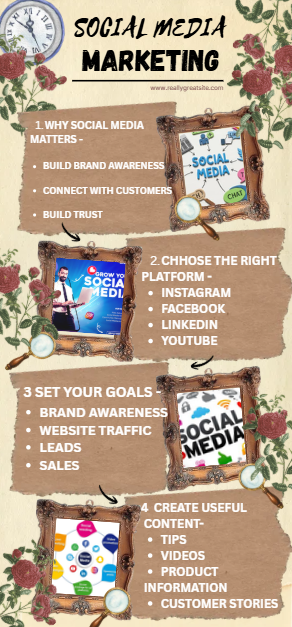
1. Choose the right platforms
You don’t have to be active everywhere. Choose platforms that suit your business and where your customers are likely to spend time.
For example, a visual business may find Instagram useful for photos and short videos. A business selling to other companies may prefer LinkedIn. Consider your audience, the kind of content you can create, and the time you have available.
Start with one or two platforms. You can expand later if you have a clear reason to do so.
2. Set a simple goal
Decide what you want social media to help your business achieve. Your goal might be to:
- Make more people aware of your brand
- Get more enquiries
- Bring visitors to your website
- Share useful information with existing customers
- Promote a particular product or service
A clear goal helps you choose what to post and what to measure.
3. Plan content your audience will find useful
A good content plan includes more than promotional posts. Mix different types of content, such as:
- Tips and answers to common questions
- Product or service explanations
- Customer feedback, shared with permission
- Behind-the-scenes photos or videos
- Business updates and special offers
Keep your posts natural and easy to understand. Use clear images or video, and include a simple next step when it fits—for example, “Visit our website to learn more.”
4. Post consistently
You don’t need to publish multiple times a day. Choose a schedule you can maintain, whether that means a few posts each week or another steady rhythm.
Planning posts ahead can make it easier to stay consistent. A simple calendar can include the post topic, platform, format, and planned date.
5. Talk with your followers
Social media works best as a two-way conversation. Reply to questions and comments in a timely, helpful way. Thank customers who share feedback, and respond politely to concerns.
If a question needs more detailed support, guide the person to the right contact method. Avoid sharing private customer information in public replies.
6. Review what’s working
Check your platform insights regularly to see which posts get attention and interaction. Look at measures that connect to your goal, such as website visits, enquiries, comments, or saves.
Use what you learn to improve your next posts. If people respond well to practical tips, consider sharing more of them. If a format isn’t helping you meet your goal, try something different.
Common social media marketing mistakes
- Trying to use every platform at once
- Posting only sales messages
- Sharing without a clear plan or goal
- Ignoring comments and questions
- Expecting immediate results
- Copying trends that don’t fit your brand
Start small and stay consistent
Choose the platforms that make sense for your audience, set one clear goal, and plan a few useful posts. Keep listening to your followers and adjust your approach over time.
Social media marketing is most effective when it reflects your business and gives people a reason to connect with you.
Frequently asked questions
Which social media platform is best for a small business?
The best platform depends on your audience, business, and the content you can make consistently. Start where your customers are most likely to spend time.
How often should a small business post?
There’s no single schedule that works for every business. Choose a manageable posting rhythm and focus on sharing useful content consistently.
What should a business post on social media?
Share a mix of helpful tips, product or service details, customer stories, behind-the-scenes content, and relevant updates. Keep promotional posts balanced with content that informs or interests your audience.
Does social media marketing cost money?
You can create and publish organic posts without paying to promote them. Advertising, design tools, or professional support may involve additional costs.
How can I tell if my social media strategy is working?
Measure results based on your goal. This could include enquiries, website visits, engagement, or increased awareness among your intended audience.