How to Create a Digital Marketing Strategy for Your Business
Digital marketing can include SEO, social media, video, email, online ads, and more. With so many options, it can be difficult to know where to begin. A clear strategy helps you focus on the channels and activities that suit your business and customers.
You don’t need to use every new tool or follow every trend. Start with your goals, understand your audience, and make a plan you can maintain.
What is a digital marketing strategy?
A digital marketing strategy is a plan for using online channels to reach business goals. It outlines who you want to reach, what you want to achieve, which channels you’ll use, and how you’ll measure progress.
For example, a local service business may focus on local SEO, helpful website content, and social media. An online store may use product videos, email marketing, and paid ads.
1. Set a clear marketing goal
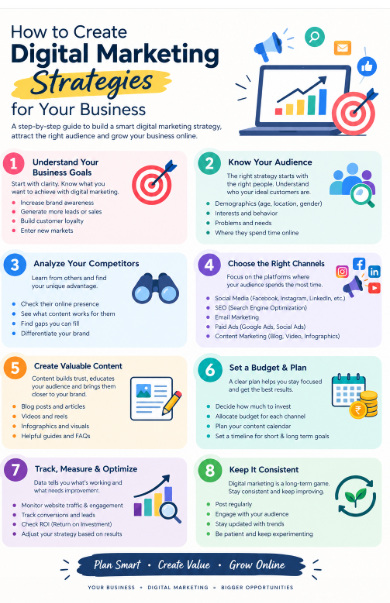
Decide what you want your marketing to achieve. Your goal could be to:
- Increase relevant website visits
- Get more enquiries or bookings
- Grow online sales
- Reach customers in a specific location
- Build awareness of a new service
Choose a goal that connects to your business. “Get more likes” may be useful as a supporting measure, but it may not show whether your marketing is bringing in customers.
2. Understand your audience
Think about the people most likely to need your product or service. Consider:
- What are they looking for?
- What questions do they ask before choosing a business?
- Which platforms do they use?
- What might stop them from buying or enquiring?
Use customer conversations, enquiries, reviews, and website feedback to learn what matters to them. This can help you choose better topics and messages.
3. Choose the right marketing channels
You don’t have to be active on every platform. Pick channels that match your audience, your goals, and the type of content you can create.
Some options include:
- SEO: Help people find useful pages on your website through search.
- Social media: Share content and connect with your audience on social platforms.
- Email marketing: Send updates and useful information to subscribers.
- Video marketing: Explain products, answer questions, or demonstrate a service.
- Online advertising: Promote an offer to a selected audience.
A strong starting point might be one or two channels that you can use consistently.
4. Create helpful content
Plan content around the questions your audience asks. You could create blog posts, short videos, social media tips, FAQs, or case studies.
For each piece of content, decide:
- Who it is for
- What question it answers
- Which channel it will appear on
- What the reader or viewer can do next
One useful topic can also be adapted for different formats. For example, a blog post can become a short video, several social media posts, and an email newsletter.
5. Use trends when they fit your business
New tools and platforms can offer useful opportunities, but a trend is only worth trying if it supports your goals and makes sense for your audience.
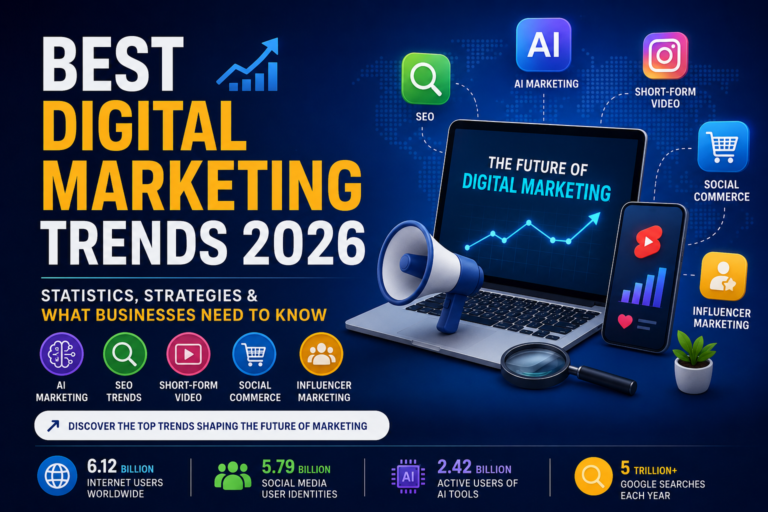
For an overview of current opportunities, read our guide to the best digital marketing trends in 2026, with statistics and strategies.
Replace the placeholder with the URL of your existing trends article. In WordPress, select the bold anchor text, click the link icon, and paste the article URL.
6. Set a manageable schedule
Choose a publishing schedule you can realistically maintain. A simple monthly content calendar can include the topic, format, channel, and publishing date for each item.
It’s better to publish useful content steadily than to create an ambitious plan that is difficult to follow.
7. Measure progress
Check whether your marketing is helping you reach your goal. Depending on your business, useful measures could include:
- Relevant website visits
- Enquiries, calls, or bookings
- Online sales
- Email sign-ups
- Cost per lead
- Repeat customers
Review results regularly and adjust your plan based on what you learn. Avoid judging success by a single number without considering your business goal.
Common digital marketing strategy mistakes
- Trying to use too many channels at once
- Choosing tactics without a clear goal
- Posting content without considering the audience
- Expecting immediate results
- Tracking likes and views without looking at business outcomes
- Following trends that don’t suit your business
Start with a simple plan
A useful digital marketing strategy begins with one clear goal, a good understanding of your audience, and a small number of suitable channels. Create helpful content, follow a realistic schedule, and review your progress.
As your business learns what works, you can improve the plan and explore other opportunities.
Frequently asked questions
What should a digital marketing strategy include?
It should include your business goal, target audience, chosen channels, content plan, schedule, and a way to measure results.
Which digital marketing channel should I start with?
Choose a channel based on where your customers look for information and what you can manage consistently. Many businesses begin with their website and one other relevant channel.
How often should I review my strategy?
Review your progress regularly, such as once a month or after a campaign. Update the plan when your goals, audience, or results change.
Do small businesses need a digital marketing strategy?
A simple strategy can help small businesses focus their time and budget. It gives each marketing activity a purpose and makes it easier to see what is working.